

Russia Urges Venezuela to Reject NATO ‘Schemes’ for Arming Ukraine


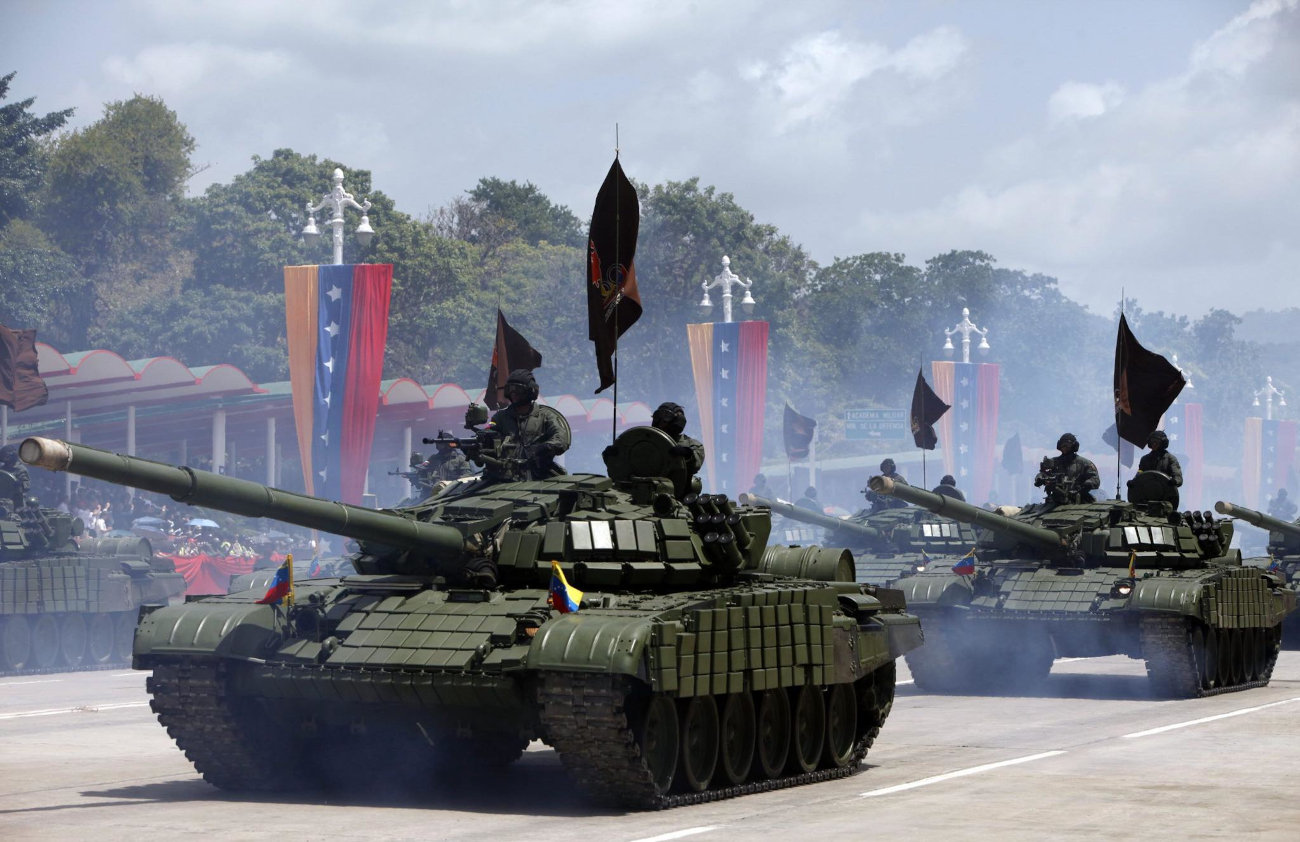
Caracas, May 29, 2026 (venezuelanalysis.com) – The Russian government has urged Venezuelan authorities to “reject approaches” from the US and allies to transfer military equipment to Ukraine.
Russian Security Council Secretary Sergei Shoigu raised the concerns during a meeting with Venezuelan Major General José Ornelas Ferreira, secretary general of the Caribbean nation’s National Defense Council, on Wednesday in Moscow.
The Venezuelan official was a guest at the First International Security Forum, held from May 26-29 at the Russian capital with the presence of 140 top officials from over 120 countries worldwide.
“We are aware of the activity of Western emissaries who are attempting to involve Latin American countries in various arms supply schemes for the benefit of the Kyiv regime,” Shoigu said in a bilateral meeting with Ornelas. “We expect you to reject such approaches and inform us of any such Western attempts.”
Moscow and Caracas have maintained a longstanding military alliance through which Russia has provided Venezuela with a broad supply of weapons, equipment, and technical assistance for decades, forming the backbone of the Venezuelan arsenal. The cooperation dates back to the 2000s as Hugo Chávez sought to reverse the US dependence of the armed forces.
Though neither US nor Venezuelan officials have commented on weapons transfer proposals, Shoigu’s warning follows publicized efforts by Washington and allies to bolster the beleaguered Ukrainian forces in the war against Russia. Kiev’s backers procure Soviet-era equipment that could be easily integrated into the battlefield.
Apart from securing supplies from Eastern European NATO members, Washington has also turned to Latin America, offering to exchange Russian and Soviet-made hardware for newer US equipment. Brazilian and Colombian leaders rejected the proposal.
In February 2024, Ecuador canceled plans to send or exchange Soviet/Russian-origin weaponry with the US, which intended to reroute them Ukraine. Ecuadorian President Daniel Noboa backtracked following Russian threats to suspend banana imports from the Andean country.
According to military analysts, Venezuela’s battlefield equipment — including T-72B1V tanks, BMP-3 infantry vehicles, Mi-17 helicopters, and 152 mm artillery systems — would be valuable on the Ukrainian battlefield and help address chronic ammunition shortages.
The recent Moscow security summit also saw Shoigu condemn the US’ “brutal armed invasion” of Venezuela on January 3 that led to the kidnapping of President Nicolás Maduro and First Lady Cilia Flores.
“We strongly condemn Washington’s actions on January 3, during which the legitimate head of state, Nicolás Maduro, and his wife were captured, and dozens of Venezuelan and Cuban citizens were killed,” the former Russian defense minister stated.
Shoigu criticized the Trump administration for “violating all fundamental norms of international law” and breaking “the principles governing coexistence among nations and respect for state sovereignty.”
The Russian official went on to reaffirm the Vladimir Putin government’s “unwavering support” for Caracas and the desire to “strengthen cooperation” in order to avoid future acts of aggression.
Shoigu likewise commented on the Venezuelan government, led by Acting President Delcy Rodríguez, pursuing a “new modality of relations” with the US and expressed hope that it would protect the Caribbean country’s “sovereignty and national interests.”
Following the January 3 attacks, the Trump White House has exacted major concessions from the acting Rodríguez administration, including seizing control of Venezuelan oil revenues, auditing its Central Bank, pushing pro-business legislative reforms, and securing the handover of former government envoy Alex Saab to face money laundering charges in Florida.
The growing US influence in Venezuela saw the Southern Command hold “rapid response” military exercises on May 23, with Osprey MV-22B aircraft flying over Caracas and landing near the US embassy compound.
US officials have acknowledged a growing “collaboration” with Caracas. During a press conference on Wednesday, Secretary of War Pete Hegseth highlighted Washington’s self-declared anti-narcotics operations in the Western hemisphere and the joint work with local governments.
“Just think about the fact that our Southern Command commander landed by helicopter at the US Embassy in Caracas peacefully,” Hegseth said alongside Trump. “He was welcomed by the Venezuelans because we are now partnering with them, hopefully even in our counter-cartel missions.”
The Trump official referred to Venezuela as “fundamental to securing our energy future and defending the homeland.”
Edited by Ricardo Vaz in Caracas.