

Liccia Romero: ‘We Need a Policy to Fund Agroecology’


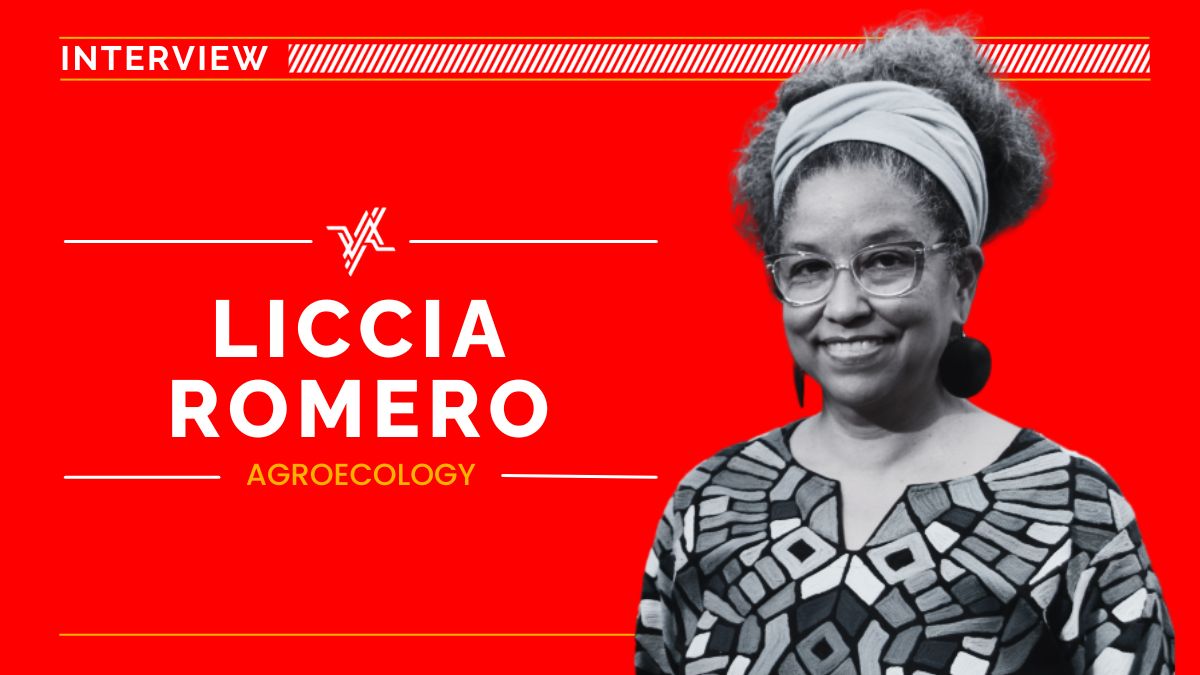
Liccia Romero is a prominent biologist and professor at the University of the Andes (ULA) in Mérida. Her academic and organizational work has been centered on the scientist-campesino alliance, in defense of food sovereignty and biodiversity in the páramo region, and in opposition to the logic of agribusiness.
In this interview, Romero discusses the challenges and achievements of the Mano a Mano (“Hand in Hand”) Agroecological Market, a grassroots initiative founded in 2010 that connects producers and consumers in Venezuela’s Andean region. She also talks about projects to expand agroecology, coordination with state institutions, and the importance of Venezuela’s Seed Law.
How have the producers at the Mano a Mano market experienced the revival of this space given the pandemic and the economic blockade, and what strategies have they employed to adapt to Venezuela’s current reality?
The combination of the blockade and the pandemic beginning in 2020 brought about a shift in Mano a Mano’s dynamics. We had a biweekly delivery system organized around prepaid orders, with a production rhythm established after 10 years of uninterrupted work.
We never even stopped during the guarimbas [insurrectionary opposition protests]. We always organized ourselves to hold the market every other Saturday and make our deliveries. And then, suddenly, the pandemic interrupted our activity with the lockdown. Later, although mobility restrictions were gradually eased, there were fuel shortages. This forced producers to employ various strategies, such as starting to sell directly from their farms.
For a time, Mano a Mano had a four-wheel-drive vehicle, thanks to support from the Ministry of Science and Technology, which helped with our distribution. Producers from remote areas would bring their harvests to a common location. This made it possible to organize a more feasible distribution route.
Another important development was that producers began transforming farm products into processed foods, with a longer shelf life. In this way, they reduced their reliance on delivering fresh produce and began processing a portion of it using various techniques. This slightly altered the profile of the production units.
Several Mano a Mano producer families have ventured into this field with great success, even creating lines of processed products. What’s interesting is that they not only process what they produce but can also source from nearby production units.
These are the strategies that have allowed people to sustain themselves. In other cases, smaller producers began selling at markets near their plots. There were also some who retired, or left production to their children, who no longer followed the agroecological methodology.
When we resumed the distribution events last June, the producers were able to organize quickly and establish a monthly delivery system with a different model, no longer based on prepayment. We have not been able to reorganize that way because that prepayment model relies on a level of income that has disappeared in Venezuela and for which there are still no signs of recovery.
Nevertheless, we continue with these monthly deliveries, which are tailored to the preferences of a number of families who have always supported us and who returned when we relaunched the agroecological markets.
What is the profile of the producers who make up the Mano a Mano network, and how does this initiative bridge the gap between rural and urban areas?
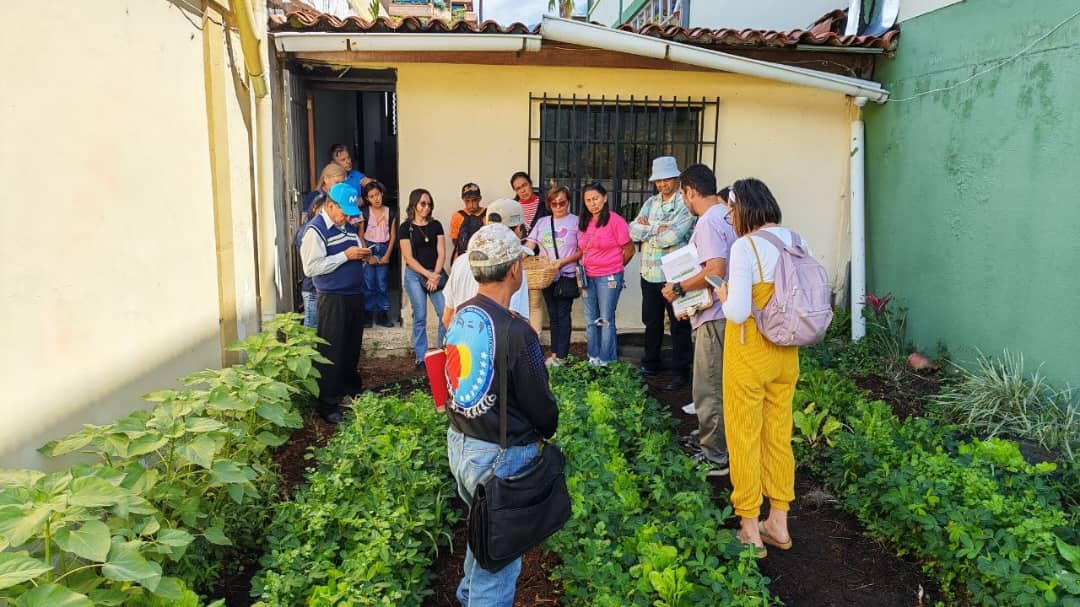
Since Mano a Mano defines itself as a local production and consumption network with the city of Mérida as its hub, most of the producers who bring their products to the market are located in the state’s coffee-growing and livestock-raising regions.
This is an area located between 1,000 and 1,800 meters above sea level, where agroforestry crops and some short-cycle crops typical of this environment predominate. For example, in the drier areas, bell peppers, onions, and tomatoes are grown. In wetter areas, we have agroforestry systems with coffee and bananas. There are also unconventional crops that are native to this region such as sacha inchi, yacon, and chachafruto. We are trying to introduce them in our distributions.
Some people have had great success producing yacon honey, primarily for consumers with medical conditions like diabetes. Flours, such as chachafruto flour, are also processed for those seeking gluten-free foods. Additionally, we have sacha inchi, an innovative food that can be used to create novel recipes by combining it with coffee and cacao.
We also have production units at greater altitudes dedicated to growing root vegetables, such as potatoes and carrots, as well as vegetables.
Producers who are part of agroecological circuits contact us, and we establish connections so that some of them can coordinate with various local producers, bring the products, and be present at the market. In this way, we minimize travel as much as possible. The idea is not to exceed a radius of 90 km [from Mérida city]. That is the distance we believe is most reasonable for everything to work well.
Previously, Mano a Mano was organized through in-person assemblies, but currently, these interactions take place mainly in digital spaces. We have a group with the producers registered in the organization, where we plan delivery dates, conditions, and prices. Not all producers can join this group. Rather, each member has undergone a verification process on their farms and agrees to regular visits to monitor their production process.
Our goal is to hold in-person meetings two or three times a year to make decisions, such as undertaking new projects. On the administrative side, we have a board of directors that is institutionally responsible for the agreements we enter into. For example, the one we currently have with the Ministry of Agriculture.
What agroecological and traditional campesino techniques do Mano a Mano producers use for planting, soil management, and pest control, and how do they maintain productivity and quality?
There are several basic principles. The main strategy is diversification. We must move as far away from monocultures as possible. The more diverse the system, the better. It will offer many advantages in the face of technical, production, and market challenges.
What is the basis of that diversification? Seed diversity –open-pollinated seeds. That is why, at Mano a Mano, we promote and are part of all movements in favor of open-pollinated seeds and against privatization. Free seeds, in the hands of campesino families, stand in opposition to all processes of seed control. These two strategies –open-source seeds and crop diversification –form the foundation.
Then there are specific techniques. For example, depending on the circumstances, intensive soil revitalization and recovery processes can be carried out using mountain microorganisms, or as some call them, efficient microorganisms.
There is also the use of organic fertilizers and the entire process of planning planting, management, and harvesting with a preventive approach to diseases and pests. The other strategy is consumer education,that is, teaching consumer families that their consumption should align with production cycles. Certain harvest times are more favorable for specific products.
On the other hand, depending on the circumstances, we have worked on implementing water-saving techniques in semi-arid areas and techniques to prevent erosion. We have also worked on the use of mulch and crop rotation as mechanisms to regenerate and protect soils. Depending on the area, we have used contour farming, minimum tillage, recycling, the use of crop residues, and on-site fertilizer production.
How does the recent support from the Ministry of Agriculture align with the autonomy and self-management nature of the Mano a Mano market, and what mechanisms have its members created to preserve their grassroots organization?
The question is interesting because we were the ones who sought that alliance, as we believe that the work we do should have an impact and win over those responsible for public policies.
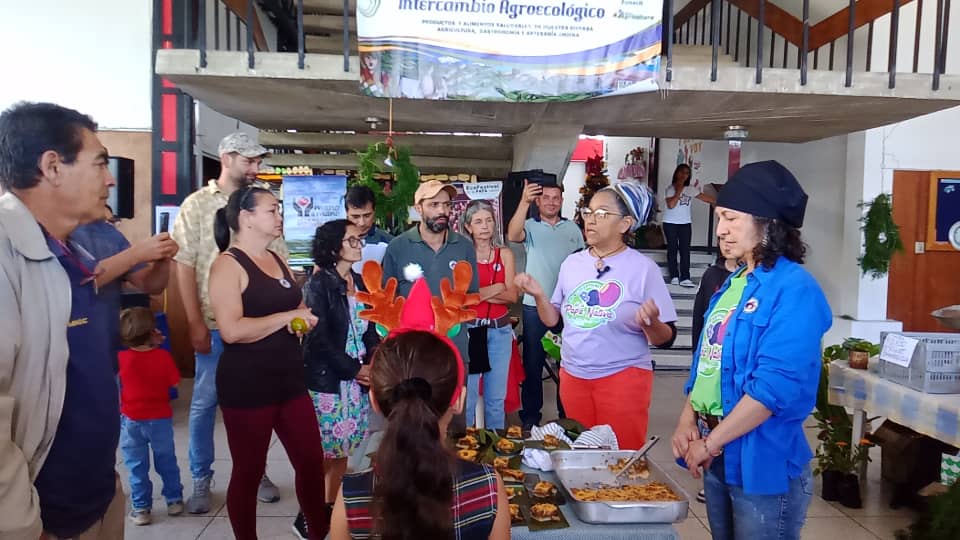
One way to achieve this was to reach an agreement to occupy an office space and a garden at the Ministry, as well as to carry out joint activities: product exchange events, workshops, festivals, fairs, etc. Additionally, this is where the research projects supported by the Ministry of Science and Technology are carried out.
The most important thing right now is an initiative of participatory agroecological certification. We are developing a methodology to rigorously comply with this certification, so that we can issue seals endorsed by both government agencies and private entities.
Our collaboration with the Agriculture Ministry is based on mutual respect and collaboration. We focus on what we have in common, not on our differences.
We know that Mano a Mano is more than just a market. What other projects are currently underway?
Participatory agroecological certification is one of those projects that extends beyond Mano a Mano. Our idea is for this certification to serve as a tool for other agroecological hubs and campesino communities that want to establish sovereign certification processes.
In other words, we’re not interested in traditional corporate certification,which involves payments to companies or private certifiers,but rather in certifications that foster self-organization and self-management.
That is the methodology we are interested in, and we are now trying to establish links with other national organizations so that, once we have completed and submitted the respective reports to FONACIT [national science fund] and the Ministry of Science and Technology, we can democratize and share this proposal to begin transferring it to other spaces.
These are some of the things we promote: training programs in partnership with universities, the Institute of Environmental and Ecological Sciences, the graduate program in Agroecology at Simón Rodríguez University, etc.
Another initiative we carry out in partnership with other organizations is the Native Potato Ecofestival, an annual event now in its 14th year. This event takes place at the end of the year, in December, and not only celebrates the potato harvest but also showcases all the work done throughout the year, sharing it and promoting it on a national level.
We invite students, cooks, and farmers to create a space for community, but also for presentations, knowledge transfer, and seed distribution. It has the support of partner networks such as PROINPA, the universities I mentioned, and other local seed producers and agroecological organizations.

Given the challenges small-scale campesinos face in a market dominated by agribusiness, does agroecology represent a real alternative? What policies would be needed to make it viable in the current context?
I think we need a funding policy for agroecological initiatives, and there hasn’t been one for a long time. So it’s often said that agroecology only works on a small scale. It only works on a small scale because there is no large-scale support in agroecology.
If the available land isn’t the best, if people lack financing and have barely any access to basic resources like water and seeds, you can’t expect high yields. What we also need are policies that recognize the self-managed processes of agroecology as opposed to subjecting them to the savage capitalist market.
If a producer, after all the effort, rigor, and sacrifice, obtains a product but lacks a properly identified marketing and distribution channel, that product is lost. We must create conditions for these agroecological products, including health permits, because it makes no sense for contaminated products to have an easier ride.
We need these regulations and laws to be updated and adapted to our circumstances so that they become tools for progress rather than obstacles. The same applies to participatory agroecological certification: it is not a mechanism for control, but rather for promoting and facilitating the agroecological transition.
Furthermore, Venezuelan food policy and jurisprudence should begin to protect non-polluting agriculture that promotes resource conservation. Because it often happens that an agroecological area, or even an organic or biodynamic one, is surrounded by production units that use methods threatening that agroecological production, and Venezuelan jurisprudence and laws favor those who pollute over those trying to produce in a healthy way.
In fact, we are aware of cases where landowners who use agrochemicals intensively have sued families who have attempted to demand controls on the use of these chemicals. These lawsuits have been upheld by agricultural courts. In short, we need legislation that is consistent with the claim that Venezuela wants to conserve its resources by penalizing those who do not.
What is your current assessment of the issue of genetically modified foods in Venezuela, from seeds to imported foods?
In Venezuela, we are currently engaged in a battle in which we had made tremendous progress with the approval of the Seed Law in 2015. The law was very important because, first, it declares seeds to be a common good. In other words, it prevents their privatization. And second, it declares the promotion and reproduction of genetically modified seeds to be contrary to the national interest and the biodiverse functioning of our ecosystems.
Therefore, this is a landmark law for the ecosystemic logic of our country. Right now, there is a battle taking place amid all the contradictions we are facing as a country invaded by a nuclear power. So, we are at risk of losing that progress in this complex political moment, and we have done very poorly in the battle to educate about food.
There is great confusion among the population regarding the issue of genetically modified foods and their risks. This is a highly dangerous weapon for controlling a nation, jeopardizing its food security and food sovereignty. This technology represents a form of domination disguised as a production technique.
That is why the Venezuelan agroecological movement must ramp up an educational, advocacy, and training offensive so that our grassroots collectives, at least at the level of communes, producer organizations in rural areas, and consumer groups in cities, can be better informed about the risks. We still have time to capitalize on these comparative advantages of popular organization in the present and the future.
The law has succeeded in curbing the entry of GMOs. If it did not exist, we would face a clear invasion of genetically modified seeds. What we have failed to achieve above all is the grassroots organization needed to defend this achievement and advance it further. We need popular movements to take ownership of the Seed Law as valuable and sovereign tool at their disposal.
